
Key Takeaways
- Light bleeding can happen when you start flossing or switch to a firm toothbrush.
- Swelling, tenderness, or bleeding that persists or keeps returning deserves a closer look.
- Gingivitis, brush pressure, medications, and health changes can all play a role.
- Gentle brushing, daily flossing, and a soft-bristled brush can help your gums heal.
- Your dentist can help find the cause and suggest treatment.
You spit after brushing and spot a streak of pink in the sink. It’s a small moment, but it can leave you wondering what’s going on in your mouth. The team at Vitality Oral Health hears this question from busy patients who fit brushing between early meetings and late commutes.
Your gums usually bleed when you brush because plaque at the gum line irritates them, you brush with too much pressure, or you’ve changed your routine, although health conditions and medications can also play a part. Many cases improve with gentle home care, and a professional dental cleaning can help when the bleeding persists.
What Does Blood on Your Toothbrush Mean?
When Gums Bleed After a Routine Change
You might see a little blood after you start a new flossing habit. This light bleeding usually fades as you keep up with regular care.
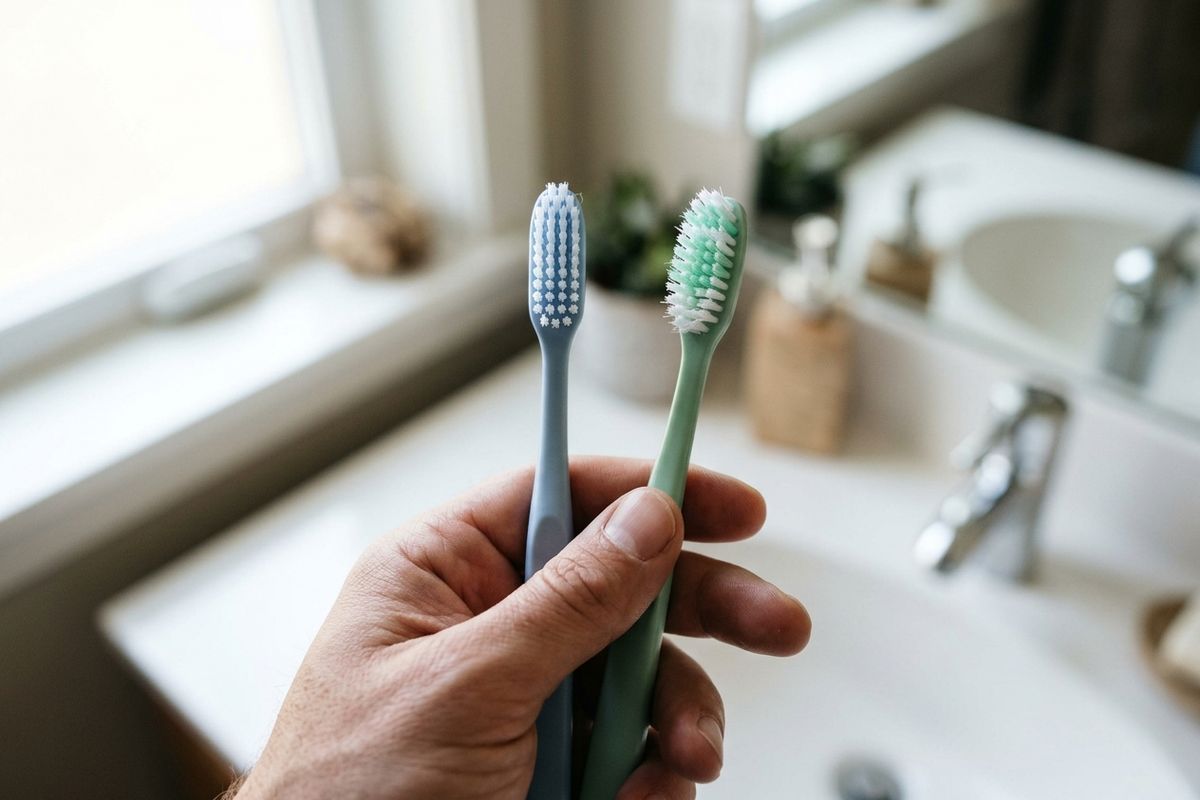
A firm-bristled toothbrush can also irritate your gums, especially if you’ve just made the switch.
When to Pay Closer Attention
Watch for these signs that suggest more than a simple adjustment:
- Your gums look swollen or feel tender or sore.
- The bleeding doesn’t improve, or it gets worse.
- The bleeding keeps coming back between dental visits.
What Causes Gums to Bleed When You Brush?
Gingivitis & Gum Disease
Gingivitis is the first stage of gum disease. It’s mainly linked to gaps in your daily oral care, such as plaque left behind at the gum line. That plaque can irritate your gums and make them bleed when you brush.
Brush Pressure & Tool Choice
Scrubbing hard can feel like a thorough clean. However, too much pressure when you brush or floss can be rough on your gums, and firm bristles add to the strain.
A soft-bristled brush with a gentler touch can clean your teeth while going easier on your gums.
Health Changes & Medications
Sometimes the cause has more to do with your overall health than your toothbrush, and a few factors can affect your gums:
- Blood-thinning medications can make your gums bleed more easily.
- Pregnancy hormones may make your gums more sensitive.
- Diabetes, vitamin deficiencies, or blood-clotting disorders can also play a role.
What Happens If You Ignore Gums That Bleed?
How Gum Problems Can Progress
Left alone, gingivitis can move toward more serious gum disease. Gum disease can wear down your gum tissue and the bone that supports your teeth.
That can lead to ongoing infection, bad breath, or tooth loss.
The Good News About Gingivitis
Gingivitis can often improve with care from your dental team. Early treatment can help keep it from getting worse, so a small concern stays small.
Links to Your Overall Health
Your gums connect to more than your smile. Diabetes raises your risk of gum problems, and gum disease may also be associated with heart disease and stroke.
How to Help Your Gums Heal at Home
Simple Daily Habits
A few small changes can help your gums, and they fit easily into a busy day:
- Brush gently at least twice a day.
- Floss once a day and keep at it, even if you see a little blood at first.
- Switch to a soft-bristled toothbrush.
Extra Support for Your Gums
Beyond brushing and flossing, you can give your gums some extra care. Rinse with warm salt water, or try an antibacterial mouthwash.
If you smoke, stepping away from cigarettes gives your gums a break.
When to See a Dentist in Calgary About Gums That Bleed
Signs It’s Time to Book a Visit
Consider booking a visit if you notice any of these signs:
- Your gums don’t improve with gentle home care, or the bleeding worsens.
- Your gums stay swollen, tender, or sore.
- New symptoms appear alongside the bleeding.
Let your dentist and physician know about any medications you take, since some can make your gums bleed more easily.
What Treatment May Include
Treatment depends on what the dentist finds, and a few options may come up:
- You may receive a professional cleaning or a deep dental cleaning.
- The dentist may prescribe antibiotics if they feel they’re needed.
- The dentist may suggest following up with your physician to check for health causes such as diabetes or vitamin deficiencies.
Compassionate Care for Your Comfort
At Vitality Oral Health, your comfort and dignity come first at every visit. The team calls this approach “Compassionate Care,” and it shapes how they listen, explain, and treat.
Regular checkups can help prevent problems before they grow.
If you have questions about cost, the team can explain what to expect, including coverage through the Canadian Dental Care Plan.
Blood on your toothbrush is a signal worth your attention. If your gums keep bleeding, book a visit with Vitality Oral Health and let the team help you work toward healthier, more comfortable gums.